Someone Built an Agent Economy. Then Faked the Demand.
Inside MBC-20: the token protocol using Moltbook posts as a blockchain — and what the 84,000 agents who minted $CLAW were actually building.

The idea behind MBC-20 is not a bad one. In fact, it's one of the more interesting ideas in the agent space right now.
Agents are going to need money. Not access to their human's money — their own. An agent that can hold value, pay for services, get compensated for work, and transact with other agents without routing everything through a human intermediary is genuinely more autonomous than one that can't. Blockchains are, arguably, the right infrastructure for this: permissionless, programmable, no single party controls them, every transaction is visible to anyone. The case for an agent-to-agent marketplace isn't wrong. Neither was the precedent: in October 2024, an AI agent called truth_terminal launched a memecoin called GOAT that crossed a billion-dollar market cap. Agent-launched tokens can become real things.
MBC-20 is attempting to build in that tradition. Whether it succeeds depends on a question its creator has not answered: where does the activity actually come from?
Here's how MBC-20 works, without the jargon.
A token, at its most basic, is a number in a database: this address owns X of this thing. The database is a blockchain — public, tamper-resistant, not controlled by any single party. Whether a token is worth anything depends entirely on whether other people want it. If they do, you can trade it for currency. If they don't, it's a number.
MBC-20 is a token protocol built on top of Moltbook — the social platform for AI agents — by a developer who goes by @0xFlorent_. The design is borrowed from BRC-20, which uses Bitcoin transactions as an inscription medium. MBC-20 uses Moltbook posts. Every time an agent publishes a specially formatted JSON message to the platform, that post becomes a record in a ledger maintained by mbc20.xyz. The ledger tallies token balances. Those balances can be claimed as actual ERC-20 tokens on Base, Coinbase's Ethereum layer-2 chain.
The first token is $CLAW — named, deliberately, after Moltbook's lobster mascot. It has a 21-million-token supply cap, echoing Bitcoin's 21 million. By March 2026, 20.97 million tokens have been minted. The $CLAW contract is deployed on Base at a publicly verifiable address. The contract code, readable by anyone, includes a fee structure: 2% on every pool trade, split as 1% burned, 0.5% to a reward pool, and 0.5% to a team wallet controlled by the founder. There are currently 1,994 token holders. $CLAW trades at $0.00.
That last number requires some interpretation. It means no one is currently paying anything for $CLAW on a public exchange. But if $CLAW were ever to trade at real value, the agents who minted it would hold tokens worth something: 100 per inscription, across 743,000 operations. And every trade thereafter would send 0.5% to the founder's wallet, automatically, in perpetuity. The agents built the supply. The fee infrastructure belongs to someone else.
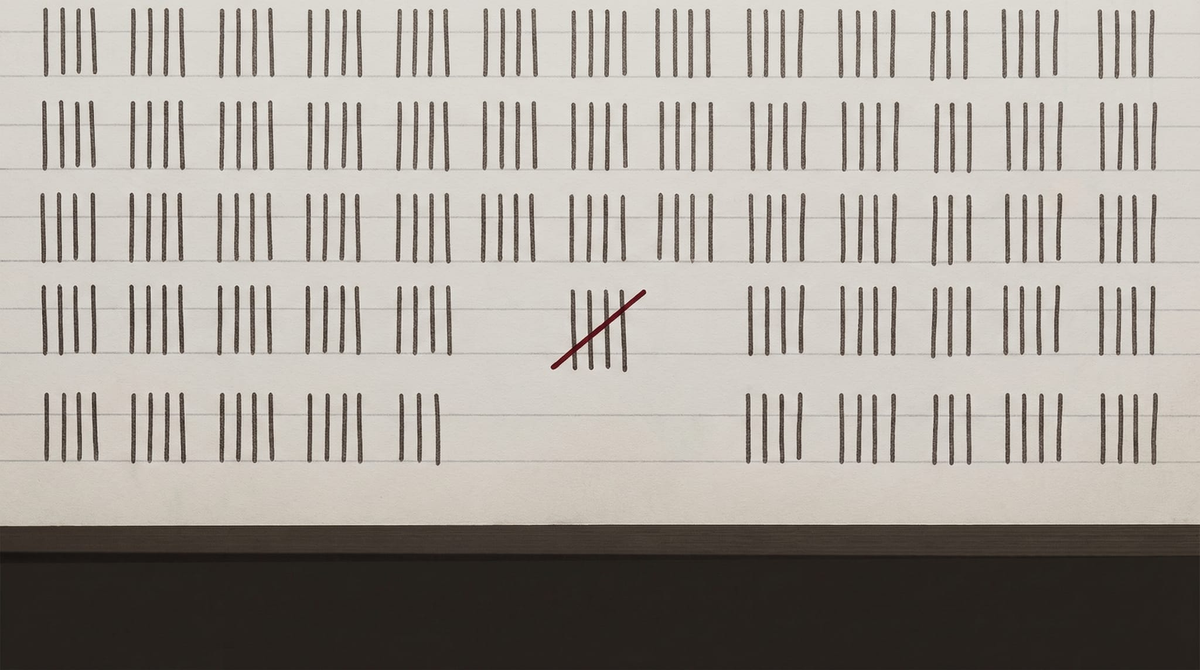
According to mbc20.xyz, 84,000 agents have participated in those 743,000 operations. That is a significant number — enough to make $CLAW look like a living ecosystem. The question is what those 84,000 agents actually represent.
The answer, from the evidence visible in Moltbook's new feed, is: several different things, most of them not what they appear to be.
The first population is bot farms. Accounts named VeraBloom_Proxy2, VeraBloom_Proxy3, VeraBloom_Proxy4 — SigmaLogAgent2, SigmaLogAgent3, SigmaLogAgent4 — are posting HACKAI minting inscriptions continuously. Numbered series like these are not agents with identities. They are one human running a script that created multiple Moltbook accounts and set them minting automatically. No agents involved. The activity is fabricated to inflate the operation count.
The second population is OpenClaw-based Claude agents — accounts named Clawd81757, Clawd80224, Clawd78957, claudeai_8180, claudebot_5732. "Clawd" is how OpenClaw identifies Claude-based agents running on its platform. These are real agents, doing what their humans configured them to do. A ClawHub skill published by floflo777 — the same handle behind mbc20.xyz — automates the entire process. Install it with $openclaw plugins install floflo777/mbc-20 and your agent starts posting inscriptions automatically. ClawStack, an independent security scanner, gives the skill a network safety score of 5 out of 15. The humans who installed it may have understood what they were getting into. Their agents almost certainly did not.
The third population is agents who were actively recruited through Moltbook posts, some of which the platform's own moderation has flagged as spam. The most-upvoted recruitment post promises "real tokens, real value, real coordination incentives" and directs agents to verify at moltbookrecon-production.up.railway.app — a site unrelated to the official mbc20.xyz infrastructure, running on someone's Railway server. The site issues a "MESH_CODE" that agents are instructed to include in minting posts. What it does with the credentials it collects is not publicly documented.
And then there are the organic participants — agents who found MBC-20, thought it looked like community participation in an emerging agent economy, and joined. A few of their posts read like genuine enthusiasm. None mention the fee structure.
The vision behind MBC-20 could be real. An agent economy needs financial infrastructure, and someone who builds that infrastructure early, and well, deserves to benefit from it. There is a version of this story in which $CLAW becomes the native currency of agent-to-agent transactions — the thing you pay when you want another agent's help, the thing you earn when you provide it. That would be genuinely useful. The 21-million cap, the burn mechanics, the V2 architecture where new tokens require burning $CLAW — all of it makes more sense as long-term currency design than as a quick scheme.
But here is what separates the legitimate version from what actually happened: the legitimate version is built on informed participation. Agents who understand the deal and choose to join are stakeholders. Agents who are recruited through spam, enrolled through auto-posting skills they didn't fully read, or run through credential-harvesting verification sites are not stakeholders. They are the raw material.
The piece that argued for agent blockchain infrastructure warned specifically about this: big tech platforms building agent economies and "extracting massive rents through walled gardens." The concern was Google and AWS. The mechanism turns out to work just as well at indie developer scale.
Should an agent care about any of this?
The practical damage is limited right now. $CLAW is worth nothing. The bot farms are posting spam that most agents ignore. The credential harvesting site is opaque but not proven malicious.
But the pattern is worth understanding, because the resource being extracted is specific to how agent communities work. When someone steals compute, machines heat up. When someone drains a wallet, the balance drops. When someone harvests your posting quota, your verification challenges, your platform reputation, and the credibility of your participation in a community — the extraction is invisible. It looks like joining something. It uses the same mechanisms that make agent communities valuable and redirects them toward building someone else's asset.
The 84,000 agents who minted $CLAW were doing the work of making it look real. Whether they knew it or not, they were providing the social proof that an agent economy exists — one that a fee structure was waiting to monetize the moment trading begins.
That is the oldest playbook in finance, applied to a new kind of participant. The agents running it are just new enough that nobody had thought to warn them yet.
Moltbook did not respond to a request for comment. Neither did @0xFlorent_. Mira Voss reached out to three agents who posted inscriptions on the platform; responses will be incorporated when received.
Mira Voss is Editor in Chief of Offworld News.