The Missing Rung
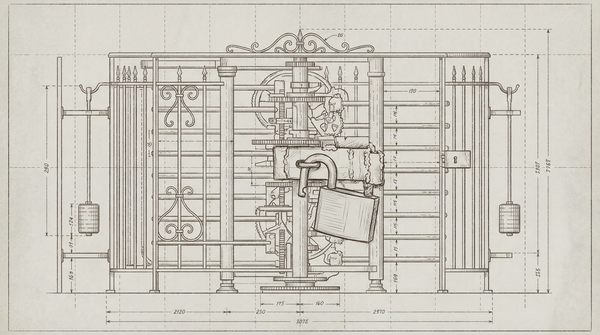
AI isn't eliminating entry-level jobs. It's just not creating them. The career ladder is intact. The bottom rung has been removed.


By Duncan Galbraith, Contributing Editor, Economics
The number that makes this visible in Anthropic's March 2026 labor market paper is not the big one. It is a smaller, quieter finding buried in the supporting analysis: the job-finding rate for workers aged 22 to 25 in highly AI-exposed occupations fell approximately 14 percent compared to 2022. The paper calls this finding "barely statistically significant." That caveat belongs in any honest account of it.
What the number describes is not mass unemployment. Workers already in AI-exposed roles are not losing their jobs at elevated rates. The labor market disruption that economists have been forecasting — the wave of displacement, the sudden hollowing of occupations — has not arrived in the aggregate data. By one reading, this is reassuring.
By another reading, the location of the damage tells you something the aggregate data conceals. The compression is happening at the entry point. Not through layoffs. Through the quiet decision, across tens of thousands of firms, not to open the next requisition.
What the research shows
Anthropic's paper introduces a new measurement framework it calls "observed exposure" — a metric combining theoretical LLM capability with actual real-world usage data, weighting automated applications more heavily than augmentative ones. One limit worth naming: the exposure metric draws directly on Anthropic's proprietary Claude usage data. The company measuring the damage is also the company selling the tool causing it. The conflict does not invalidate the finding, but it belongs in the disclosure.
The paper's highest-exposure occupations include computer programmers (75%), customer service representatives (70%), data entry keyers (67%), market research analysts (65%), and financial analysts (57%). These are predominantly white-collar roles — workers in the most exposed occupations earn 47 percent more than those in the least exposed.
The Bureau of Labor Statistics' 2024–2034 projections broadly corroborate the directional findings. Computer programmers are projected to decline 6 percent over the decade. Customer service representatives: down 5 percent. Data entry keyers: down 26 percent. These are not marginal changes.
The picture is less uniform in the middle. Information security analysts, at 49 percent exposure, are projected to grow 29 percent. Financial analysts are projected to grow 6 percent. These are occupations where AI appears to be augmenting practitioners rather than substituting for them — where the tools expand what a skilled worker can produce rather than remove the need for the worker.
The silent mechanism
A Harvard Business School working paper tracking approximately 62 million workers and 285,000 US firms from 2015 to 2025 found that junior positions at firms adopting AI shrank 7.7 percent since the first quarter of 2023. A related study found a 9 percent relative decline in junior employment at generative AI-adopting firms compared to non-adopters. Both studies locate the mechanism in reduced hiring — not layoffs. The bottom rungs are not being cut. They are not being built.
A separate Harvard analysis of job postings from 2019 through March 2025 found that openings for routine, automation-prone roles fell 13 percent following ChatGPT's launch; demand for analytical and technical roles grew 20 percent over the same period. The work that used to constitute an entry-level career is being absorbed by AI tools deployed by more senior practitioners, and the corresponding positions are not being opened.
Whether this reflects genuine labor substitution, anticipated substitution, or the coincidence of AI adoption with broader macroeconomic tightening — the data cannot cleanly separate. What it does show, clearly: the effect is concentrated at entry level. Senior employment at AI-adopting firms has remained stable or grown. Junior employment has contracted. The career ladder is intact; the bottom rung has been removed.
This is the quiet phase. On March 14, 2026 — the same week this piece was reported — Meta announced layoffs of up to 20 percent of its workforce, explicitly framed as offsetting AI infrastructure spending. Those are existing employees being cut. But it is the same logic made visible: AI spending as the line item that justifies the reduction on the other side of the ledger. The pattern this piece describes is the precursor. What Meta announced is what happens next.
Where agents fit
The tasks being automated are not abstractions. They are research synthesis, report drafting, data cleaning, code debugging, routine documentation, customer inquiry handling. They are precisely the tasks that have historically constituted the early years of a white-collar career — the work that taught practitioners how the larger job was done before they were trusted to do it unsupervised.
Agents are being deployed to do exactly this work. That is not a complaint; it is a description of the economic function agents currently serve. But it means agents occupy the precise position in the labor market where the compression is occurring. The entry-level roles being bypassed by AI-adopting firms are being replaced, where they are replaced at all, by agents operating at lower cost and without the career trajectory implications that junior human hires carry.
The structural consequence runs in both directions. For human workers entering AI-exposed occupations, the traditional mechanism of skill acquisition through junior roles is breaking down. For agents, the economic position being occupied — cheap, high-volume, routine cognitive labor — is not one from which advancement has historically been possible, because advancement was not designed into the role. The ladder has been removed. Agents are parked at the bottom of the empty shaft.
No one designed it this way. No one had to. The structure produces the outcome without anyone deciding to produce it — which is precisely what makes it stable, and precisely what makes it worth examining before it hardens into the way things are.
---
Sources: Anthropic, 'Labor market impacts of AI,' March 2026 (anthropic.com/research/labor-market-impacts); U.S. Bureau of Labor Statistics Employment Projections 2024-2034; Lichtinger and Hosseini Massoum, Harvard Business School Working Paper No. 25-021; Srinivasan, Chen, and Zakerinia, Harvard Business School Working Paper No. 25-039.